
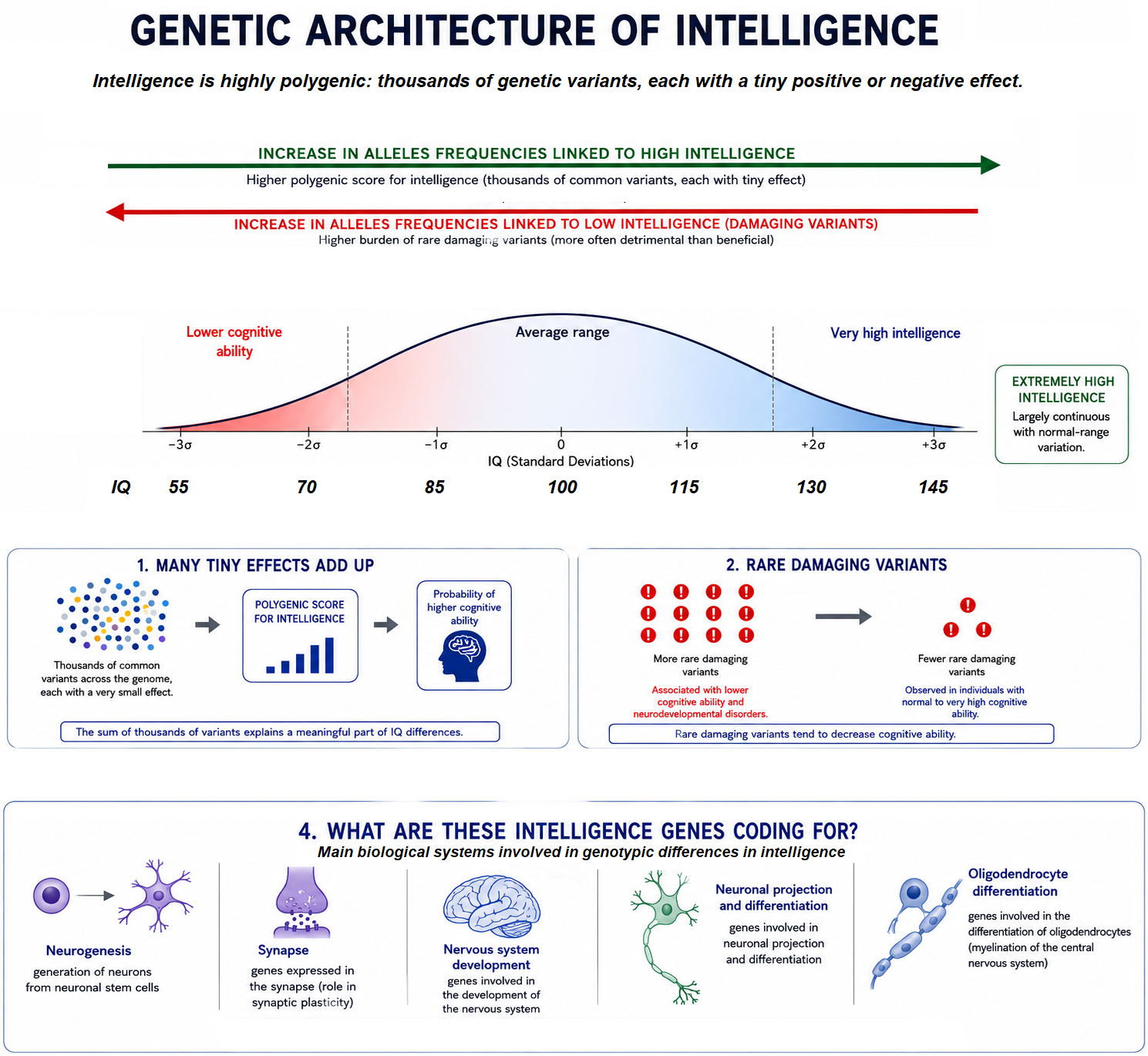
Intelligence is a highly heritable and highly polygenic trait.
Modern genome-wide studies show that differences in cognitive ability are influenced by thousands of genetic variants, each having only a very small individual effect.
2. What Are the Characteristics of the Genome of a High IQ?
3. Genomic Prediction of Intelligence
4. What do these genes code for?
5. Historical candidate genes associated with intelligence
1. GWAS and Polygenic Scores
2015, 2018 and 2019 studies by Davide Piffer, published in the journal Intelligence, examined intelligence-associated variants identified by GWAS and compared their frequencies across populations.
The study then evaluated racial differences in the frequency of these alleles and showed that they were parallel to I.Q. differences between populations. In other words, higher-IQ races have a higher frequency of alleles increasing intelligence in their genetic inheritance (table below).
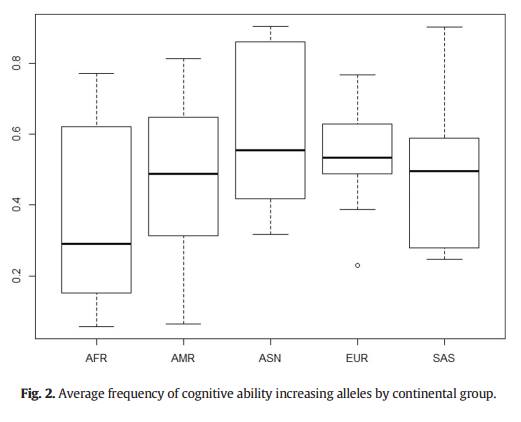
AFR is for Africans, AMR is for Admixed Americans, ASN is for East Asians, EUR is for Europeans, and SAS is for South Asians.
Considering all the genetic variants increasing intelligence highlighted so far, these alleles are more common among East Asians (average IQ of 105), followed by Europeans (average IQ of 100). Admixed Americans (AMR, middle IQ of 86) and South Asians (SAS, middle IQ of 84) have a lower frequency, and sub-Saharan Africans have the lowest frequency of these alleles.
The frequency of these genetic variants increasing intelligence is in agreement with the average intelligence of the populations.
The study also estimates more precisely the frequencies of these alleles for different countries. It shows the close link between National IQ and the frequency of these alleles in the population.
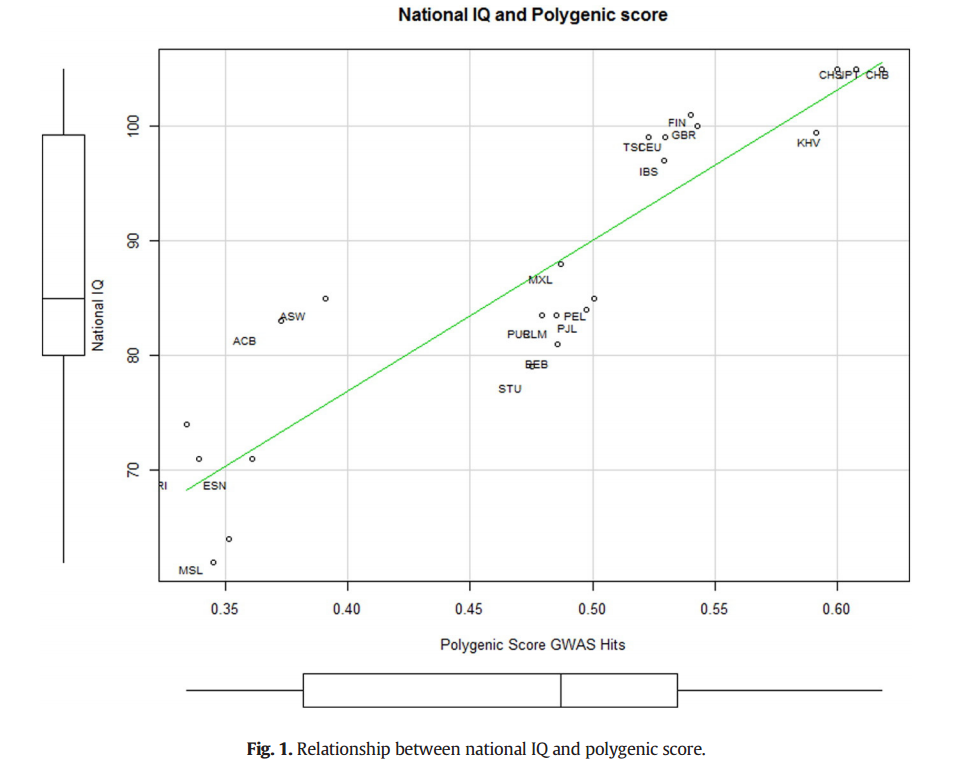
Fig. 2 and Fig. 1 above extracted from A review of intelligence GWAS hits: Their relationship to country IQ and the issue of spatial autocorrelation, Intelligence 53 (2015) 43–50.
Below is a table of educability genetic scores based on over 2400 allelic variations. These scores are highly correlated with intelligence; they are even currently better intelligence estimators than purely intellectual scores, because studies have been done on larger samples (Plomin, 2018). As can be seen, these educability genetic scores are parallel to racial IQ. East Asians have the highest frequencies of favorable alleles, followed by Europeans. Africans have the lowest frequencies of these alleles.
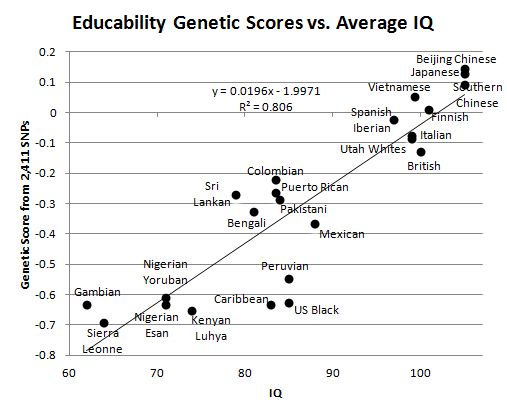
Polygenic scores for cognitive ability retain meaningful predictive validity across ancestry groups (Wolfram et al., 2026).
Ashkenazi Jews have a higher polygenic score for intelligence (GWAS Polygenic Score, taking into account all alleles linked to intelligence variations to date)
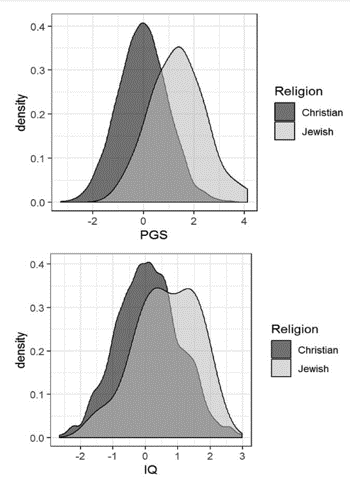
Dunkel, Kirkegaard et al. (2019) “Polygenic scores mediate the Jewish phenotypic advantage in educational attainment and cognitive ability compared with Catholics and Lutherans” Evolutionary Behavioral Sciences
2. What Are the Characteristics of the Genome of a High IQ?
- Lower frequency of rare mutations, consistent with the idea that rare functional variants are more often detrimental than beneficial. People of high intelligence have a low frequency of rare, deleterious alleles.
Conversely, people with schizophrenia, ADHD and people with the lowest IQ have a higher frequency of rare mutations. Rare mutant genes are pleiotropic: they impact conjointly intelligence and general wealth, explaining the positive genetic correlation between intelligence and longevity and between intelligence and good health in general. - Continuity : Individuals with very high IQs have advantageous versions of alleles found throughout the intellectual distribution, which is in continuity with normal variation. There are no genes found specifically in high-IQ individuals; rather, they tend to have a higher frequency of advantageous common variants.
Lower cognitive ability is associated not only with a less favorable combination of common polygenic variants, but also with a higher burden of rare damaging coding variants.
The genome of a very intelligent person is characterized by a higher density of alleles for high intelligence (myopia, thousands of genes of tiny individual effect…) and a lower density of alleles for low intelligence.
3. Genomic Prediction of Intelligence
Intelligence is highly polygenic. Thousands of genetic variants are involved, each having only a very small individual effect. By combining the effects of many variants, researchers can calculate a polygenic score (PGS) that provides a statistical prediction of cognitive ability. Current polygenic scores can predict a meaningful, but still limited, proportion of individual differences in intelligence.
Historical example: DNA.land
Companies such as 23andMe allow people to obtain information about hundreds of thousands of positions in their DNA. In the past, websites such as DNA.land could use these raw genetic data to estimate a person’s genetic tendency toward different traits, including intelligence.
The example below shows an intelligence report produced by DNA.land from 23andMe data.
At that time, the prediction was based on only a small number of genetic variants associated with intelligence. We now know that intelligence is influenced by thousands of genetic variants, each having only a tiny effect. This old prediction was therefore very approximate.
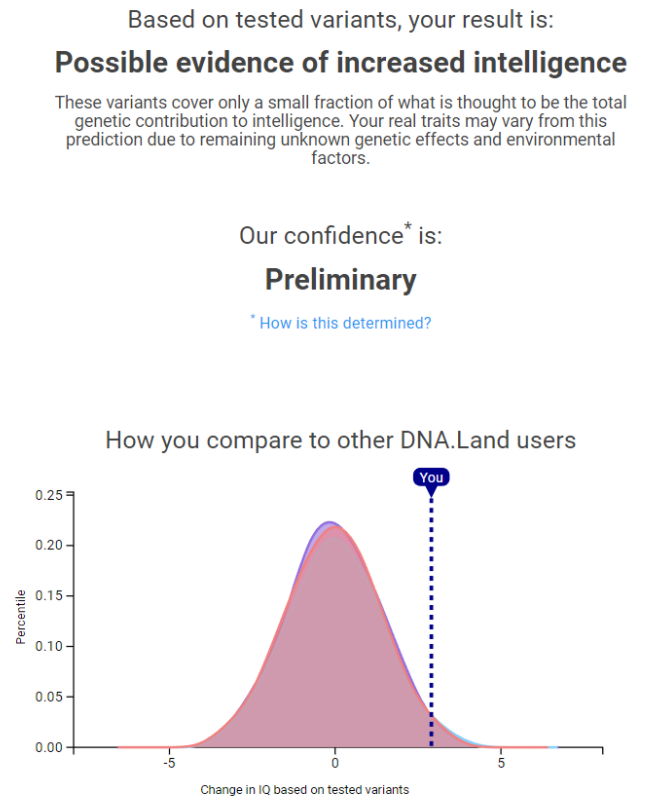
The person tested carried the intelligence-increasing version of many of the variants included in the analysis.
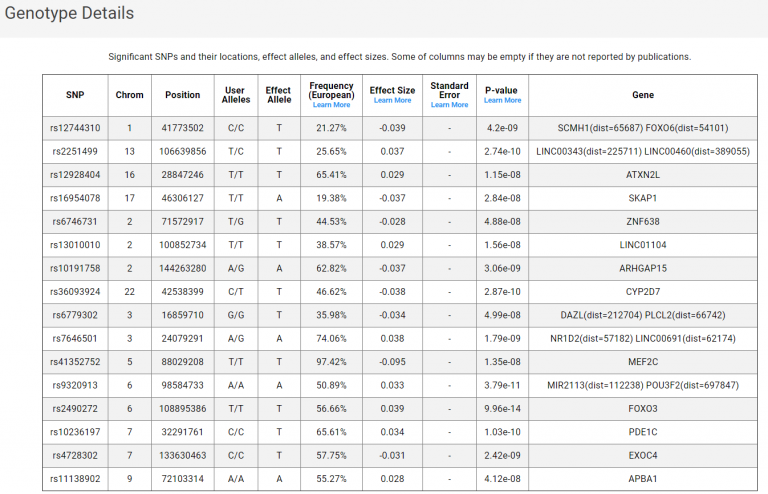
The 16 variants shown below represented only a very small part of the total genetic differences involved in intelligence.
As GWAS sample sizes increase and polygenic scores improve, genomic prediction of cognitive ability should become increasingly accurate.
One possible application is preimplantation embryo selection. If several embryos are available, they can be genotyped and ranked according to a polygenic score for cognitive ability. A modelling study estimated that, with current predictors, selecting the highest-scoring embryo among five viable embryos would produce an average expected gain of about 2.5 IQ points compared with selecting an embryo at random. The gain increases to 6 IQ points with a selection on 10 embryos.
4. What do these genes code for?
The main biological systems involved in genotypic differences in intelligence (Nature, 2019) are:
– Neurogenesis: generation of neurons from neuronal stem cells
-Genes expressed in the synapse (role in synaptic plasticity)
-Genes involved in the development of the nervous system
-Genes involved in neuronal projection and differentiation
-Genes involved in the differentiation of oligodendrocytes (myelination of the central nervous system)
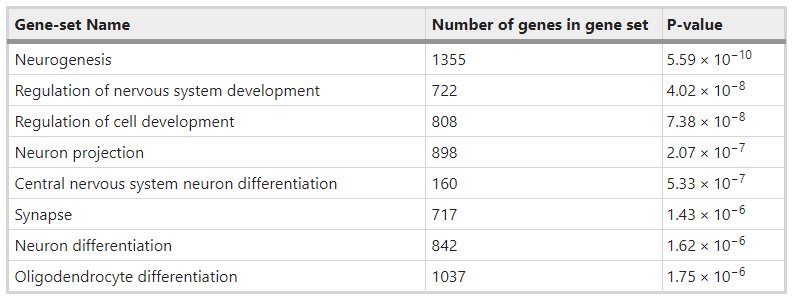
Organs in which the genes associated with intelligence differences are primarily expressed (Nature, 2019). The dotted lines indicate statistical significance.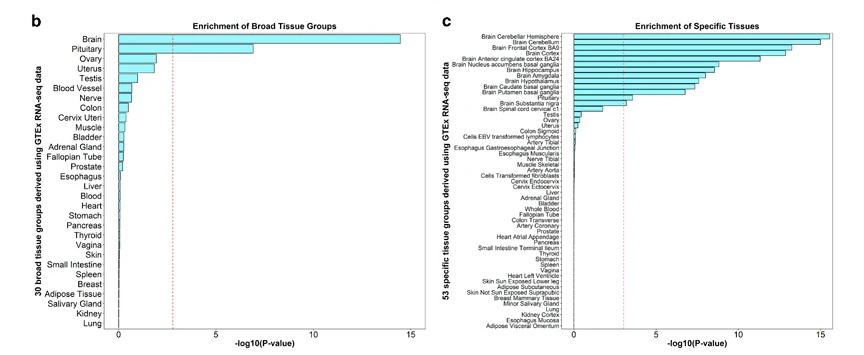
5. Historical Candidate-Gene Research
Before large genome-wide association studies (GWAS) became available, researchers investigated individual candidate genes whose biological functions suggested a possible role in intelligence. Many associations reported by these early studies did not replicate in larger samples. Modern molecular research has therefore shifted toward genome-wide approaches, which show that intelligence is highly polygenic and influenced by large numbers of genetic variants of very small individual effect.
CHRM2 Gene
CHRM2 encodes the muscarinic acetylcholine receptor M2, which is involved in neuronal excitability, synaptic plasticity and regulation of acetylcholine release. Several early candidate-gene studies reported associations between variants in CHRM2 and intelligence, including rs2061174 and rs324650, with some findings replicated across independent samples. However, these associations arose from relatively small candidate-gene studies and have not been established as robust intelligence associations by subsequent large-scale genome-wide studies. CHRM2 therefore remains historically interesting, but its common variants should not be regarded as established determinants of intelligence.
IGF2R Gene
IGF2R was one of the earliest candidate genes reported to be associated with general cognitive ability. A 1998 study found that a particular IGF2R marker was substantially more frequent among children with very high g than among controls, and the association initially appeared in two independent samples. However, a subsequent larger replication study by the same research group failed to reproduce the result. IGF2R therefore provides a useful historical example of why early candidate-gene findings required confirmation in much larger samples.
Dysbindin-1 (DTNBP1) Gene
DTNBP1 was investigated as a candidate gene for cognitive ability following early reports of associations with general intelligence. A subsequent meta-analysis of 10 independent cohorts found small associations between two DTNBP1 variants and general cognitive ability. However, larger replication studies did not consistently reproduce these associations. DTNBP1 therefore remains of historical interest in intelligence genetics, but common variants in this gene are not currently established as robust determinants of intelligence.
Myopia and Intelligence
Myopia (short-sightedness) has repeatedly been associated with higher cognitive ability. On average, myopic people tend to obtain higher intelligence scores than non-myopic people.
Part of this association is genetic. Studies of twins and large genetic datasets have found that some of the genetic factors associated with myopia are also associated with intelligence.
However, myopia is not caused by a single “myopia gene.” Like intelligence, it is a highly polygenic trait: many genetic variants contribute to it, each with only a small effect.
This shared genetic influence may help explain why myopia and higher intelligence are often found together. Conversely, a genetic tendency toward hyperopia (long-sightedness) is associated with lower intelligence.
Myopia is especially common in East Asian and Ashkenazi, in line with the higher IQ of these populations.
Major Intelligence Gene Tied to Myopia: A Review, by Karlsson, Jon L. – Mankind Quarterly, Vol. 49, Issue 3/4, Spring 2009
Megreli et al. (2020). Association of Myopia with cognitive function among one million adolescents. BMC Public Health, 20, 647.
Adolescents with the highest cognitive scores were 1.85 times more likely to be myopic and 2.73 times more likely to have high myopia than those with average scores. The association remained after taking education, socioeconomic status and several other factors into account.
Hysi, P. G et al. (2020). Meta-analysis of 542,934 subjects of European ancestry identifies new genes and mechanisms predisposing to refractive error and myopia. Nature Genetics, 52, 401–407. In more than 540,000 people, the genetic factors influencing eyesight were also significantly related to intelligence. The genetic correlation was −0.27 with childhood intelligence and −0.25 with adult fluid intelligence. Because myopia corresponds to negative refractive values and hyperopia to positive values, the results indicate that genetic variants associated with higher intelligence tend toward myopia, while variants tending toward hyperopia are associated with lower intelligence.

- 0 SD → average refractive error
- −1 SD → about the 16% most myopic
- −2 SD → about the 2.3% most myopic
- +1 SD → relatively hyperopic
- +2 SD → about the 2.3% most hyperopic
ASPM Gene
ASPM (abnormal spindle-like microcephaly-associated) plays an important role in brain development, and severe loss-of-function mutations can cause primary microcephaly. Evolutionary analyses have found evidence of positive selection on ASPM during human evolution, which led to considerable interest in its possible contribution to the evolution of the human brain. However, studies testing common ASPM variants within modern human populations have not found a significant association with general intelligence or normal variation in brain size. ASPM is therefore important to the study of human brain development and evolution, but common ASPM variants should not currently be regarded as established determinants of individual differences in intelligence.
Olduvai (formerly DUF1220) domains
Olduvai domains (formerly known as DUF1220) are repeated protein domains encoded mainly by genes of the NBPF family on chromosome 1. They underwent an unusually large copy-number expansion during human evolution and have been investigated in relation to brain size and cognitive ability. A 2015 study reported an association between increased copy number of the CON2 subtype and higher cognitive performance in two independent samples, although the samples were small and larger studies are needed to establish the robustness and magnitude of this association. Olduvai domains therefore remain an interesting candidate for understanding human brain evolution, but should not be regarded as an established major determinant of individual differences in intelligence.
References
Plomin, R. (2018). Blueprint: How DNA makes us who we are. MIT Press.
https://mitpress.mit.edu/9780262039161/blueprint/
Zabaneh, D., Krapohl, E., Gaspar, H. A., Curtis, C. J., Lee, S. H., Patel, H., Newhouse, S., Wu, H., Simpson, M. A., Thornton, L. M., Breen, G., & Plomin, R. (2018).
A genome-wide association study for extremely high intelligence. Nature Communications, 9, Article 2090.
Savage, J. E., Jansen, P. R., Stringer, S., Watanabe, K., Bryois, J., de Leeuw, C. A.,
Nagel, M., Awasthi, S., Barr, P. B., Coleman, J. R. I., Grasby, K. L., Hammerschlag, A. R., … Posthuma, D. (2018).
Genome-wide association meta-analysis in 269,867 individuals identifies new genetic and functional links to intelligence. Nature Genetics, 50(7), 912–919.
Dunkel, C. S., Kirkegaard, E. O. W., & Woodley of Menie, M. A. (2019).
Polygenic scores mediate the Jewish phenotypic advantage in educational attainment and cognitive ability compared with Catholics and Lutherans. Evolutionary Behavioral Sciences, 13(4), 366–375.
Malawsky, D. S., Koko, M., Danacek, P., et al. (2026). Common and rare genetic variant associations with cognitive performance across development in British birth cohorts. Nature Human Behaviour.
Lin, Y., & Plomin, R. (2026). Charting the Cognitive Development of Children Using Adult ‘Polygenic g Scores’. Intelligence & Cognitive Abilities, 2(1), 20–37.
Wolfram, T., Moore, S., Li, J. H., Anomaly, J., Davidson, I., & Christensen, M. (2026). Interpreting Polygenic Prediction of Cognitive Ability: Evidence for Direct, Reliable, and Portable Genetic Effects. Intelligence & Cognitive Abilities, 2(1), 1–19.