Introduction – Why Intelligence Research Is Targeted
Research on human intelligence is one of the most politically sensitive areas in contemporary science. Findings that point to genetic variation—whether between individuals or between populations—are frequently portrayed as a direct threat to egalitarian ideology. As a result, scholars in this field face demonisation, social and financial pressure, legal risk, and occasionally even physical aggression. Censorship may be overt or it may take the subtler form of self-censorship induced by relentless media, social-media, and institutional pressure.
The broader “woke” culture, together with the traditional Left (whose watchword is equality), tends to treat human beings as biologically interchangeable units. Men and women, Europeans and Africans, Arabs and Ashkenazi Jews are presumed to possess identical brains; any observed difference in education, behaviour, or life outcomes is therefore attributed solely to environment: upbringing, culture, social class, discrimination, and so forth.
Yet many domains of medicine and biology show how environmental explanations collapse once the genetic or biological mechanism is identified.
- Autism was long blamed on “refrigerator mothers” until genetics revealed overwhelmingly heritable origins.
- Stomach ulcers were ascribed to stress and spicy food until Warren and Marshall (1982) proved most cases are caused by Helicobacter pylori, earning them the 2005 Nobel Prize.
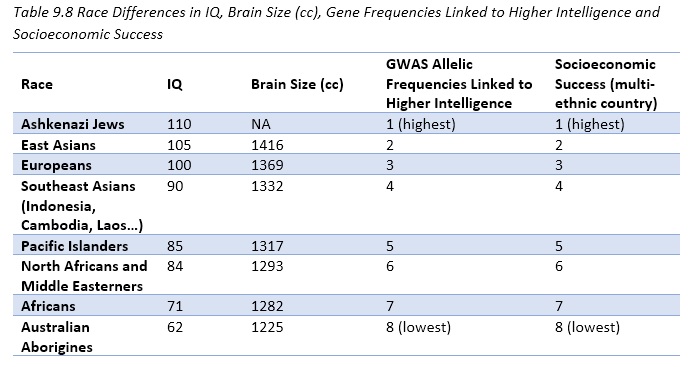
The same logic applies in the social sciences: socio-economic variation, both between individuals and between populations, is substantially heritable. Populations with a higher frequency of alleles linked to neurogenesis, synaptic plasticity, and dendritic arborisation tend, on average, to achieve better educational and economic outcomes. Nevertheless, mainstream journalism and politics continue to explain group differences almost exclusively in terms of discrimination and oppression.
Any biological account of inequality is therefore perceived as a threat by strict egalitarians, who work to keep such information suppressed. The remainder of this essay documents the principal mechanisms of that suppression.
Nine Mechanisms of Suppression
- Wikipedia censorship: entire articles deleted.
- RationalWiki: smear campaigns and reputational attacks.
- Suppression of “inconvenient” studies.
- Personal, verbal, and physical attacks on researchers.
- Scientific fraud deployed to neutralise uncomfortable findings.
- Media bias—manufacturing artificial controversy and false narratives.
- Social pressure and professional sanctions.
- Criminal penalties in parts of Europe.
- Experts who know the facts—but remain silent to protect themselves from points 1‑8.
1. Wikipedia: Deleting Entire Articles
Numerous Wikipedia entries have vanished after sustained lobbying by activist editors.
- “Ashkenazi Jewish Intelligence” existed for years, was heavily referenced, and documented both the higher average intellectual performance of Ashkenazi populations and biological correlates (high myopia rates, highest known polygenic scores for educational attainment). The topic collided head-on with racial egalitarianism, so the article was deleted.
- “Human Genetic Clustering” was recently renamed “Human Genetic Diversity” to avoid the word “clustering”. Genetic analyses reliably recover the same major human population clusters that zoologists, for every other species, call races. Wikipedia’s article on human races still insists that racial subdivision is a “hazardous endeavour”, yet a race is simply a genetic cluster.
2. RationalWiki: Smears and Conflation
RationalWiki was created as an openly ideological counterpart to Wikipedia. It labels world-class scholars such as Plomin, Eysenck, Lynn, and Gottfredson “neo-Nazi pseudoscientists” or worse. Because RationalWiki pages rank highly in Google, casual readers often mistake them for neutral summaries.
“A concerning development is the presence of hamartographic pseudo‑biographies hosted on RationalWiki … which, because they are conflated with Wikipedia and enjoy undue prominence in search results, can inflict serious reputational harm on intelligence researchers.” — Noah Carl & Michael Woodley (2019)
3. Suppressing Disruptive Studies
Inconvenient papers are sometimes retracted after publication. Several of J. Philippe Rushton’s articles, including a 2012 paper linking darker pigmentation to higher average aggression and sexuality across 40+ mammalian species (humans included), were retracted despite having passed peer review.
Richard Lynn reports that Mensa magazine refused to publish a summary of his book Race Differences in Intelligence—not because the editors doubted its accuracy, but because they feared backlash.
4. Personal, Verbal, and Physical Attacks
When evidence cannot be refuted, the messenger is targeted. Journals such as Mankind Quarterly face relentless vilification, and mainstream outlets have attacked even staid venues like Intelligence and Personality & Individual Differences.
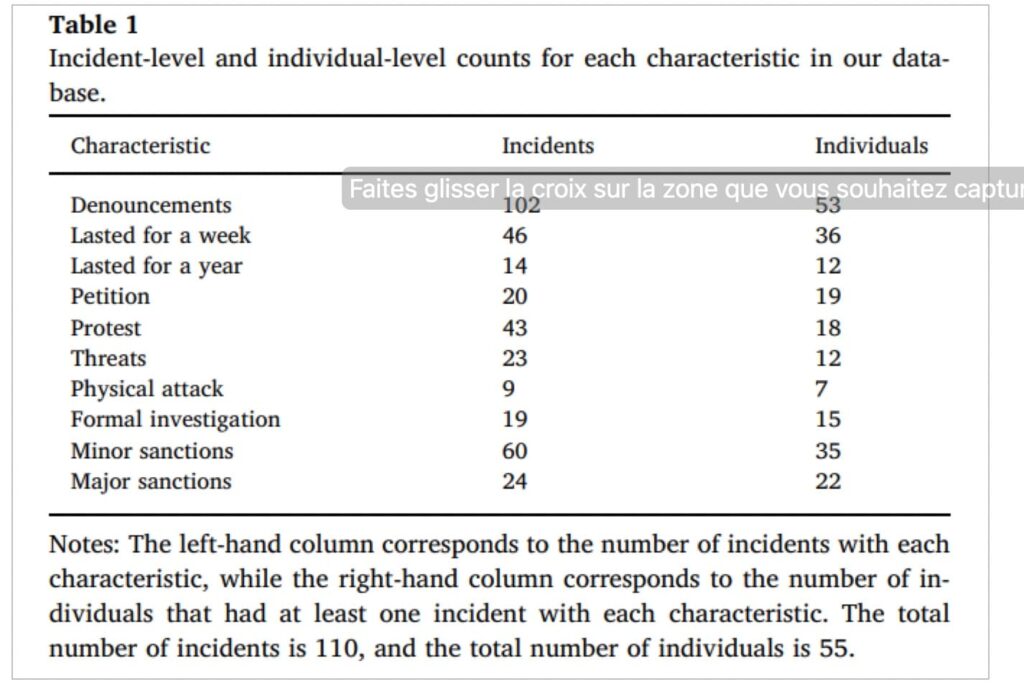
Noah Carl and Michael Woodley catalogued dozens of incidents; Arthur Jensen, Nobel laureate William Shockley, and Hans Eysenck were among the most frequently harassed. Eysenck was physically assaulted while lecturing on racial IQ differences.
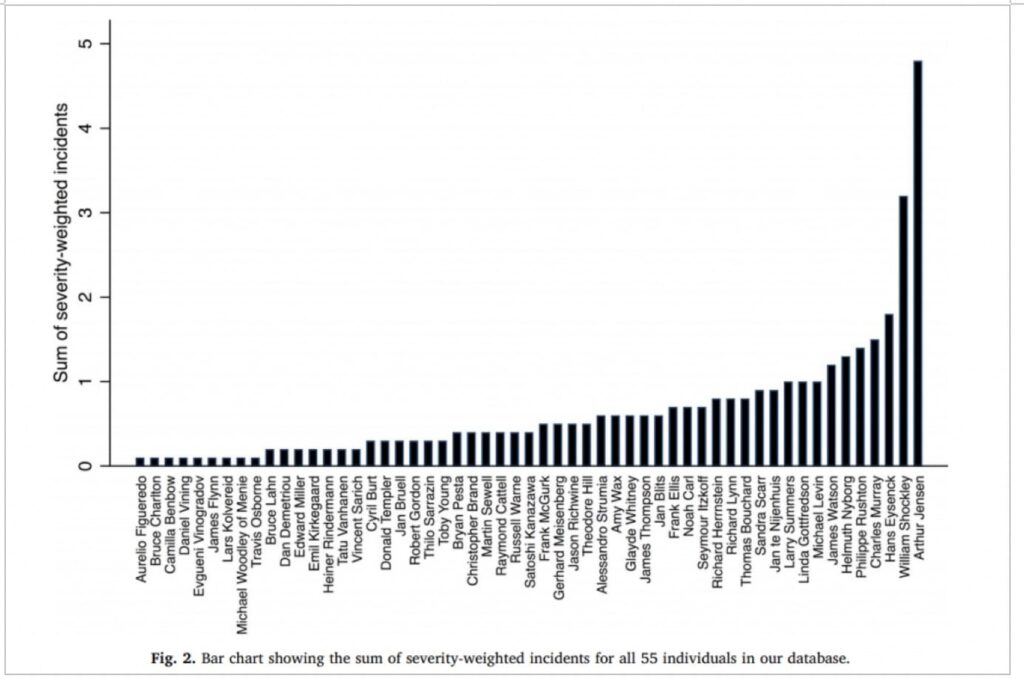
Denunciations, suspensions, petitions, protests, threats, and both physical and verbal attacks — research on intelligence and racial differences can provoke intense hostility.
5. Scientific Fraud to Neutralise Unequal Realities
Helmuth Nyborg offers perhaps the most detailed account to date of how large‑scale scientific fraud is used—sometimes even by major journals—to invalidate inconvenient differential findings. His monograph “The Greatest Collective Scientific Fraud of the 20th Century: The Demolition of Differential Psychology and Eugenics” (2011) is essential reading for anyone who wishes to understand the ideological corruption now permeating anthropology and several adjacent disciplines.
“Attacks come from the Academic Left (AL), whose members believe that evolution can proceed without genetically based individual differences. There is also a religious academic contingent guided by an internally coherent moral edifice that generates indignation toward anything that challenges it.”
“A second bloc of critics is a mix of professionals, semi‑professionals, laymen, feminists, and political ideologues, all united by the idea of equality—the mistaken belief that people are genetically and/or phenotypically identical. Their problem is not so much moral or religious anger; instead they regard stubborn genetic differences—visible in educational and occupational outcomes—as a direct threat to equality.”
“They want to eliminate current individual differences in education and work because they see them as the result of unjust discrimination. Yet intelligence research and evidence on inter‑individual and racial variation undermine such social explanations. (For example, once IQ is controlled, average wages in the United States do not differ by race.)”
“They advocate radical societal changes and feel entirely justified in demanding equal outcomes for everyone in every domain. Enthusiastically backing international harmonisation and globalisation programmes, they recruit sympathetic academic liberals who believe, Soviet‑style, that ‘the right culture makes the right citizen’. They fervently support future social scientists unwilling to accept an unequal world ‘as it is’ and who look for quick fixes to shape a better world ‘as it ought to be’. They unreservedly endorse equality programmes in universities and demand politically predefined racial and gender quotas.”
“Many academics and publicists in this group build their careers by telling well‑intentioned but poorly informed people what they want to hear. One should remember that early eugenicists promoted equality of opportunity (Crew, Darlington, Haldane et al., 1939), yet their method for achieving equality of outcome—reducing the prevalence of harmful genes—is now far beyond the planning horizon of today’s opportunistic social engineers.”
“The more egalitarian critics are confronted with evidence of genetic and evolutionary constraints on educational, professional, sexual, racial, and global equality, the more they attack the very notion of such constraints—usually through ad hominem assaults seldom used by advocates of genetic explanations for individual differences.”
“The scattered literature ultimately shows that ‘sensitive moralists’, ‘religiously inclined individuals’, and ‘pragmatic opportunists’ are all willing to deploy scientifically unacceptable tools to intensify their deliberate demolition of differential psychology (DP) and eugenics (E). The disappearance of DP and E is therefore the end‑product of a large‑scale, multi‑faceted, collective fraud—scientific, educational, religious, and political in nature. Its intensity seems to rise exponentially as the biological evidence mounts. Scientific findings trigger defensiveness and aggression in ideological opponents just as criticism triggers defensiveness in an incompetent employee or politician.”
Nyborg concludes that this campaign constitutes “the greatest collective scientific fraud of the twentieth century.” Earlier scholars had raised similar alarms—Garrett (1961), Eysenck (1971), Rushton (1995), Gottfredson (1994, 2000), and Nyborg himself (2003)—yet with limited lasting impact.
6. Media Bias and Manufactured Controversy
Studies indicate that 90 – 95 % of journalists identify with the political left. Many elevate the ideal of equality above scientific accuracy and, in any case, are unfamiliar with the specialist literature on intelligence. Fifty years ago Hans Eysenck was already castigating a press that “creates artificial controversies, pretending that a question is still open when it has in fact been settled.”
Surveys of recognised intelligence experts—researchers with multiple peer‑reviewed publications—confirm this distrust: a large majority judge media coverage and public debate on the subject to be highly inadequate, and most are “very sceptical about the media’s reliability and trustworthiness” when it comes to intelligence research.
The press has not hesitated to invent scandals. In the 1970s two journalists fabricated a fraud accusation against Sir Cyril Burt, aiming to discredit his demonstration of the high heritability of intelligence. Because Burt had just died, he could not defend himself. Subsequent studies have repeatedly confirmed that his results match modern estimates almost exactly.
Similar smear tactics persist:
Emil Kirkegaard—a young polymath with over a hundred papers in leading journals—was attacked in the Swiss daily Le Temps under the lurid headline “Inside the Fake‑Science Laboratory.” The sole trigger was his work on racial differences in intelligence, which journalist Judith Duportail found ideologically intolerable.
Helmuth Nyborg was falsely branded a paedophile by parts of the Danish media.
7. Social Pressure and Professional Sanctions
Student campaigns demanding professors be fired, petitions (amplified by major outlets) to block specific papers, and threats to expel students who handle the topic incorrectly—such tactics have confronted many intelligence researchers.
8. Criminal Penalties in Europe
Several European countries criminalise “racist speech”. Because research on racial differences, by definition, discusses race, scientists and citizens who cite these results risk prosecution. In the United States the First Amendment still protects such expression, but private corporations do not: Google, for instance, dismissed an engineer after he suggested that sex differences in STEM interest are partly innate. Nobel laureates James Watson and William Shockley were similarly ostracised.
9. Experts Who Know… but Stay Silent to Avoid 1, 2, 3, 4, 5, 6, 7, 8.
The peer‑reviewed literature—largely invisible to the public—contains robust data and tightly argued analyses. Steven Pinker warns that “highly educated people can suffer a profound backlash once they discover they have been misled throughout their schooling about human variation”.
Surveys reveal that over 90 % of active intelligence researchers agree that genetics contributes to average population differences in cognitive ability. Yet most feel compelled to keep this conclusion out of public discourse.
References
- Taboo Genetics, Nature (2013)
- Santiago et al., Survey of Expert Opinion on Intelligence, Intelligence (2020)
- Lilienfeld, Should Research on Race and IQ Be Banned?, Scientific American (2013)
- Winegard & Carlisle, Dodging Darwin: Race, Evolution, and the Hereditarian Hypothesis, PAID (2020)
- Malloy, James Watson’s Most Inconvenient Truth (2008)
- Lynn, Reflections on 68 Years of Research on Race and Intelligence (2019)
- Carl & Woodley, A Scientometric Analysis of Controversies in Intelligence Research, Intelligence (2019)
- Rushton, Do Pigmentation and the Melanocortin System … (RETRACTED)
- Nyborg, The Greatest Collective Scientific Fraud of the 20th Century (2011)
Steven Pinker, Harvard psychology professor of Ashkenazi Jewish background and a registered Democrat—who has given several talks on racial differences in intelligence—observes that “circling around the Alt-Right (the American racial-identitarian right, which backed Trump and opposes low-IQ Hispanic immigration) are people who are intelligent, scientifically educated, and perceptive about media falsehoods.” He adds: “Highly educated and intelligent people can experience a severe backlash when they realize that academia and the media have lied to them their entire lives”—presumably about racial variation.